Everbloom
Everbloom helps the world's top creators grow by providing funding and support. The start-up launched a mobile app designed for creators—primarily YouTubers—allowing the public to invest in them in exchange for a share of their YouTube revenues. As the Lead Designer at Everbloom, I designed the full product for both mobile and web.
- Contribution
- UI/UX design, visual design, prototyping, user research, brand design
- Platforms
- Android, iOS, web
- Year
- 2022
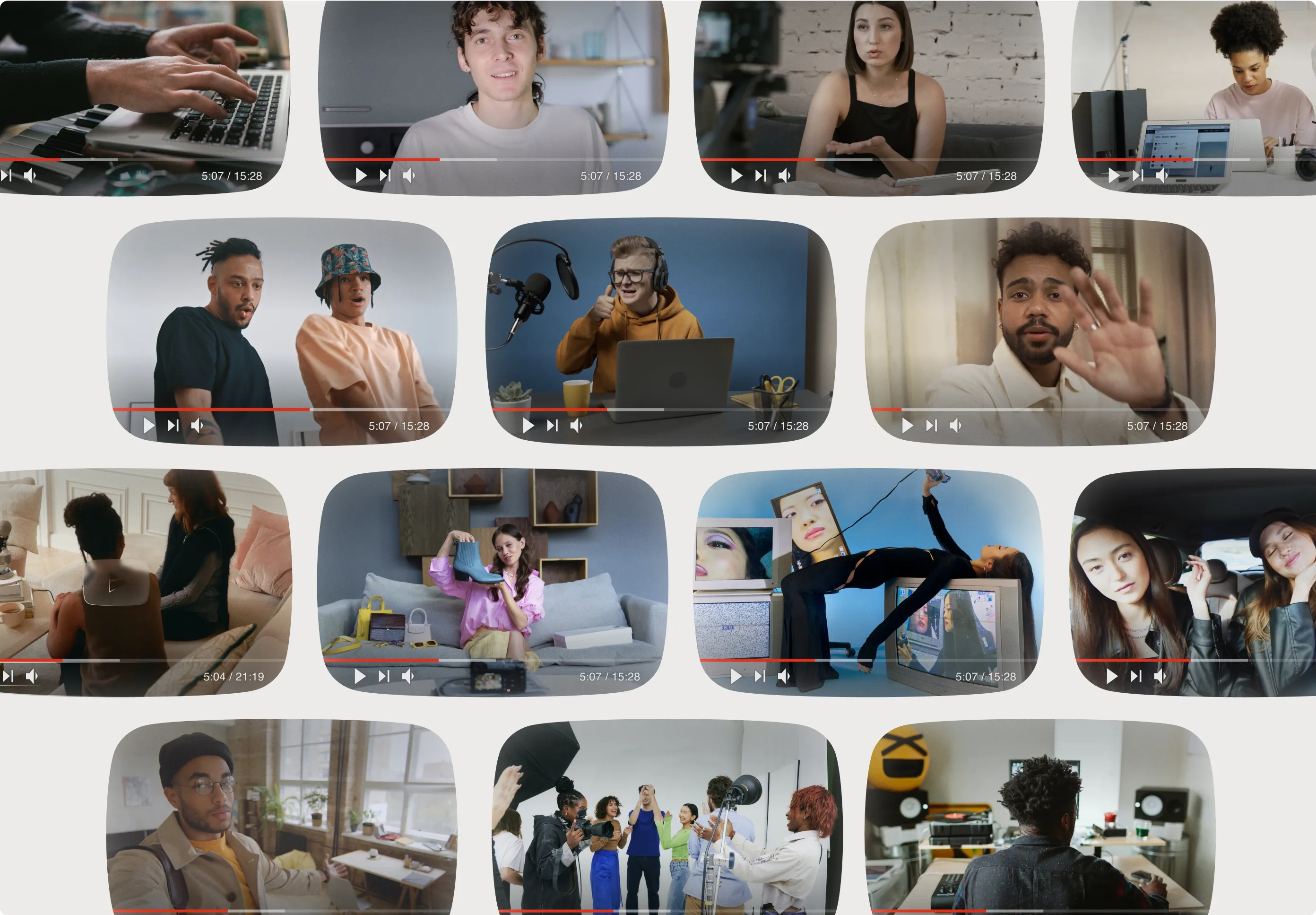
Building creator communities
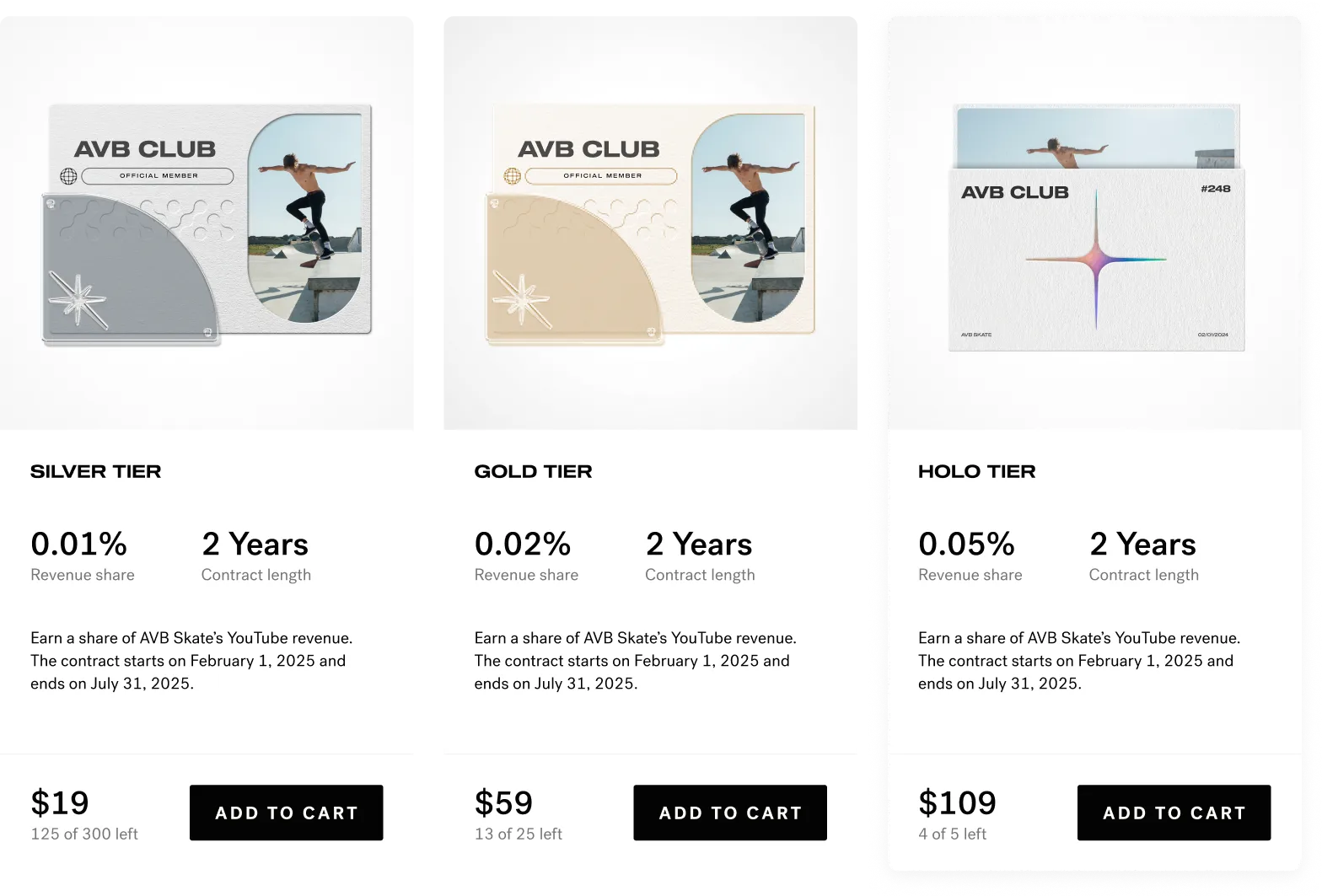
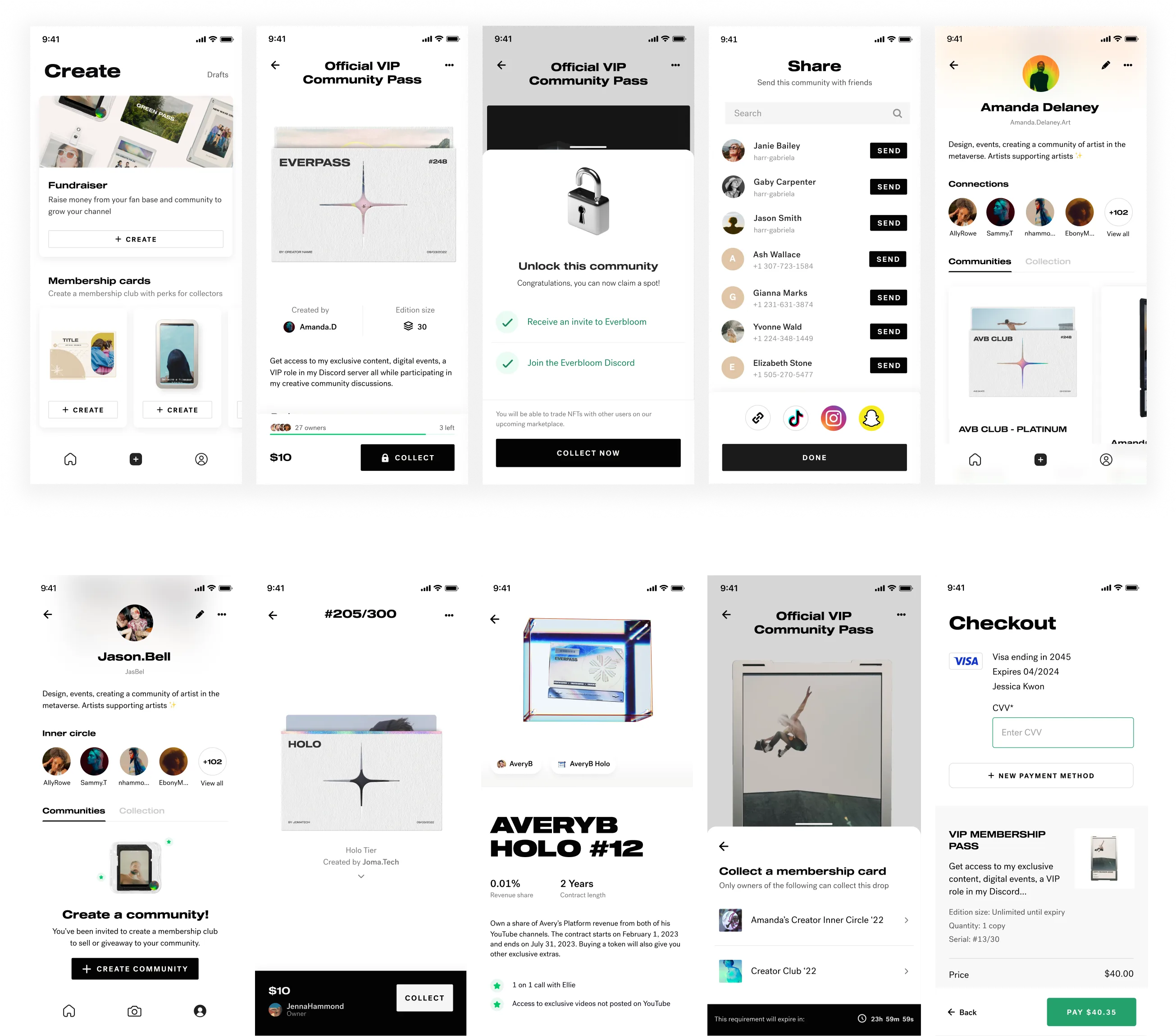
Creators can offer various membership tiers to their fans and followers, each with different revenue share percentages and additional perks. With the funds raised, creators can invest in growing their channels—whether it's hiring a team, outsourcing editing, or increasing content production. Investors benefit by receiving a share of the revenue and have the opportunity to support their favorite creators.
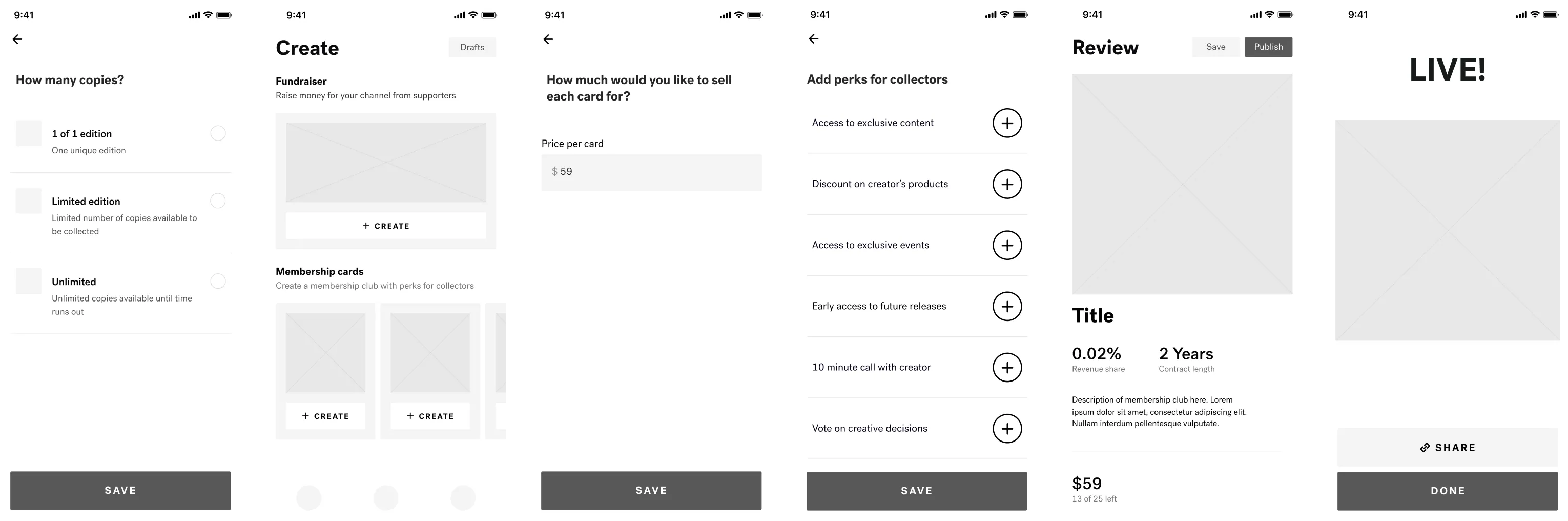
Proof of concept
Alongside the Everbloom co-founders, I helped create the initial wireframes to plan how creators could structure their membership offerings. We consulted with several well-known creators to understand how they wanted to engage their communities and what percentage of their revenues they were willing to share.
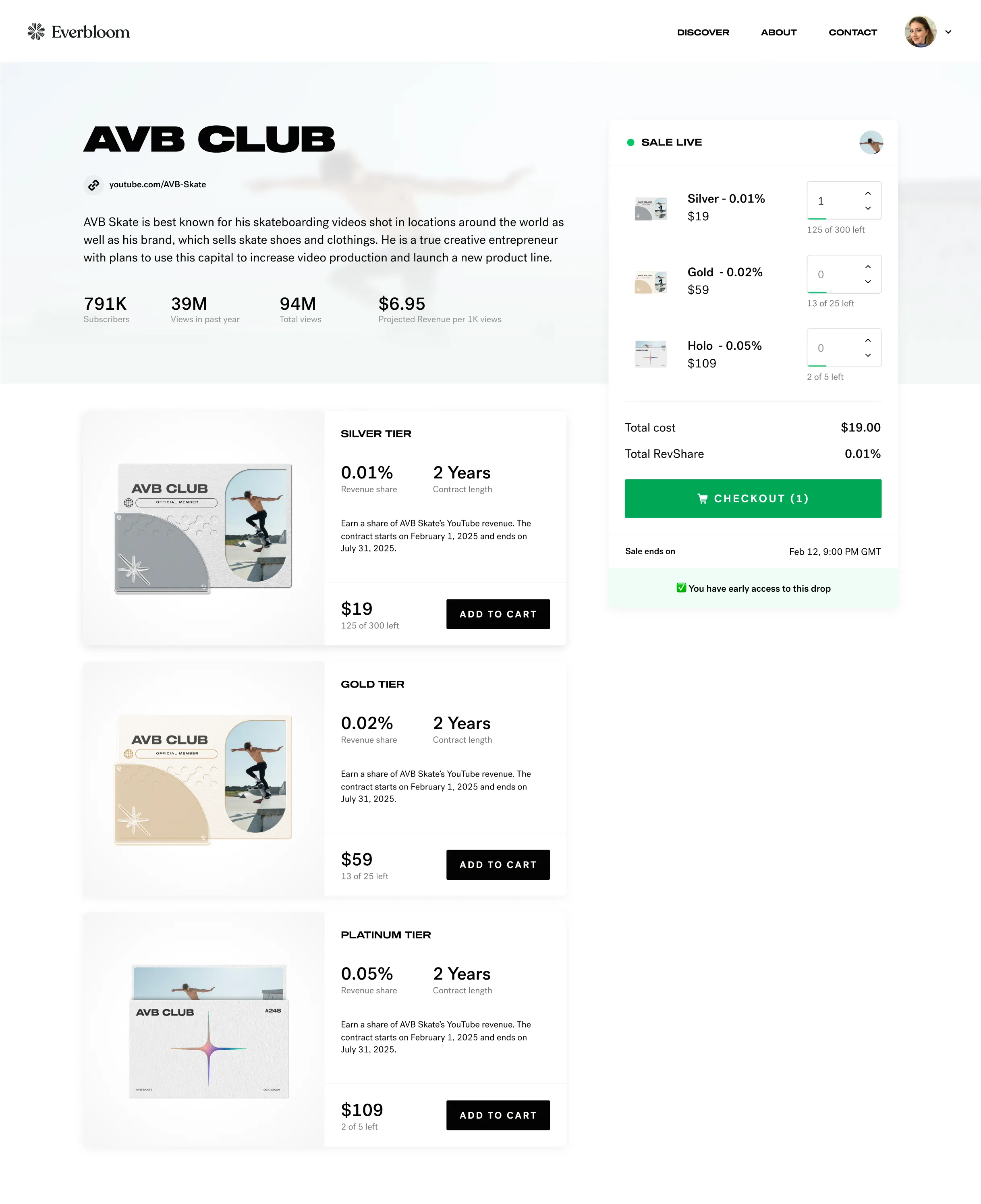
The creator launch
Once creators have set up their offerings on the Everbloom app, they can publish their drops and begin selling membership cards. I designed a page template for live drops, featuring a custom purchase module that visualizes the number of available spots and how many remain for each tier.
First creator launch
The first YouTuber to launch on Everbloom was AveryB, known for his comedic street interview videos and high-production challenges. The investment he received through Everbloom helped fuel significant growth for his YouTube channel. While the launch was successful due to the channel's growth, it's worth noting that most of the investment came directly from Everbloom, rather than from public investors on the platform.
$67K Raised on Everbloom
128% More views than the previous year
Conclusion
Everbloom's business model evolved multiple times until they found the approach they use today. During my time working on their software, we moved quickly, consistently testing our flows with creators and validating the clarity of the UX. The feedback was positive, and the app idea resonated well.
However, after the platform launched, it became clear that maintaining public investor communities wasn't realistic or worth the creators' time. As a result, Everbloom pivoted away from the software we had built and began investing in creators directly, operating more like a creator agency—a model that has since proven successful.
Everbloom continues to explore ways to integrate the original software into their new business model, but for now, the app remains inactive.